Home / Junk journal ephemera ideas
Junk journal ephemera ideas
62 free ephemera ideas for your junk journal, where to find them, how to use them on a page, and a checklist that remembers what you've collected.
Ephemera for your next page
Tick what you've got (or leave it blank to pick from everything), then shuffle.
Your ticks are saved on this device only. Nothing is uploaded.
What is ephemera in junk journaling?
Ephemera means paper things made for a short time or one occasion: a concert ticket, a sweet wrapper, a seed packet, a bus ticket, a gift tag. They're meant to be thrown away, which is exactly why they're special once they're kept. In a junk journal, ephemera is anything you add to the pages to decorate them or hold a memory, from a fruit sticker to a whole old letter.
Where can I find free ephemera?
- Your own bin and recycling. Envelopes, packaging, labels, paper bags and junk mail.
- Your wallet and pockets. Receipts, tickets, business cards and loyalty cards that have run out.
- Boxes of old cards and photos. Ask before you cut anything that belongs to someone else.
- Days out. Museum leaflets, maps, menus, wristbands and brochures are free to take.
- Your craft box. Yarn ball bands, fabric scraps, ribbon, buttons and tags.
- Garage sales and antiques fairs for vintage paper, which costs a little but is often cheap by the bag.
How do I use ephemera on a junk journal page?
| Technique | How |
|---|---|
| Tuck spot | Glue a strip of paper, lace or a doily along three sides, or just the ends, and slide tickets and tags behind it. |
| Half an envelope or a folded paper bag glued at the sides and bottom. Holds anything loose. | |
| Belly band | A strip of paper or ribbon wrapped round the page. Tuck tickets and cards under it. |
| Fold-out | Glue one edge of a big map, menu or sheet of music and fold it to fit the page. |
| Flip-up | Glue only the top edge of a postcard or photo so you can lift it and read the back. |
| Layer cluster | Stack three or four pieces from biggest to smallest, slightly off-centre, with one focal piece on top. |
Lay everything out before you glue, so you can move pieces around. Three to five pieces is plenty for one spread (our rule of thumb); more starts to look busy. Add a line of writing, a date or a doodle to pull it together. Stuck for a theme? The journal prompt generator picks a theme, a piece of ephemera and a technique for you.
Do receipts fade in a junk journal?
Most shop receipts, boarding passes and some tickets are printed on thermal paper, which isn't made to last. Archive guides from the National Archives of Australia and the University of Illinois say it can fade noticeably within about five years, faster with heat, light and humidity. If a receipt matters to you, photocopy or scan it and glue in the copy, or keep the original in a pocket away from light. Treat fading as part of the charm for everything else.
How should I store ephemera?
- Sort by type or colour into envelopes or zip bags: tickets, tags, labels, papers, fabric.
- Keep it flat in a shoe box, file folder or a spare journal, so it doesn't curl.
- Keep it dry and out of the sun, especially photos and thermal paper.
- Theme bags work well: fill one envelope per trip, season or month, then make a spread from it.
Can I make my own ephemera?
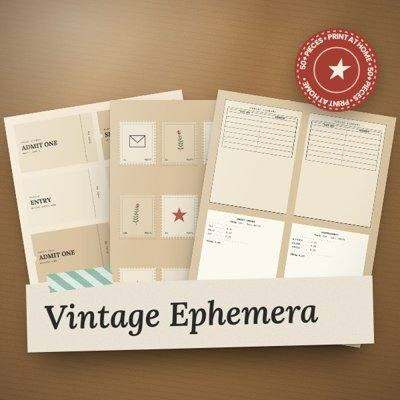
Yes, and it's half the fun. Stain plain paper with tea (our tea staining guide has the recipe), cut tags from cereal box card, turn envelopes into pockets, and write labels by hand. If you'd like a themed set ready to cut out, our printable ephemera packs below do exactly that. New to all this? Start with junk journaling for beginners, and see what else you need in our junk journal supply checklist.
Ideas and techniques gathered from LoveCrafts' ephemera guide, Upcycle My Stuff and My Modern Met's junk journal guides; thermal paper advice from the National Archives of Australia and the University of Illinois preservation guide. Descriptions are our own.
Questions crafters ask
What is ephemera in a junk journal?
Everyday paper made for one use or a short time, like tickets, receipts, labels, tags, stamps and packaging, that you glue or tuck into your journal to decorate it and keep a memory.
Where can I get free ephemera for junk journaling?
Start at home: envelopes, food labels, tea bag tags, junk mail, old cards and postcards. Add tickets, maps and leaflets from days out, and ball bands, ribbon and fabric from your craft box.
Can you put receipts in a junk journal?
Yes, but most receipts are thermal paper and can fade within a few years. Glue in a photocopy or scan if you want to keep it, and keep originals away from light and heat.
How do you make your own ephemera?
Tea stain plain paper, cut tags from cereal box card, turn envelopes into pockets, hand-letter labels, or print themed ephemera sheets and cut them out.
How much ephemera do I need for a junk journal?
Less than you think. Three to five pieces per spread is a good start. A shoe box of saved paper will fill a first journal with room to spare.
How do I store junk journal ephemera?
Flat and dry, sorted into envelopes or zip bags by type, colour or theme, in a box or file folder out of direct sun.
Free printable sampler
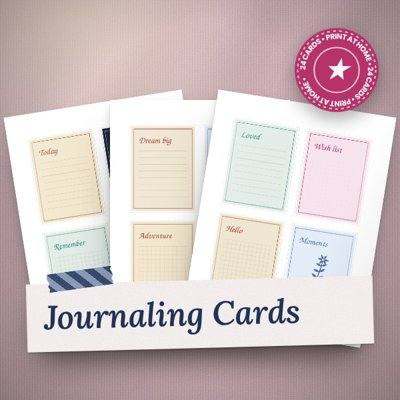
Journaling cards, a vintage ephemera sheet and a planner page from our shop, free to print. Plus new freebies and pattern ideas now and then.
Free. No spam, unsubscribe in one click. See our privacy policy.