Purl & Paper

Home / Knit stitch patterns

Knit stitch patterns for beginners: 15 knit and purl stitches

Fifteen textures you can make with nothing but knit and purl: what each looks like, the rows to knit, the stitch multiple, and whether it lies flat. Pick one below and get the rows for your own cast on.

Quick answer: the easiest knit stitch patterns for beginners are garter stitch (knit every row), stockinette (knit 1 row, purl 1 row), 1x1 and 2x2 rib, and seed stitch (k1, p1, then knit the purls and purl the knits). For a scarf or blanket that lies flat, choose garter, seed, moss, double seed, basketweave checks or mistake rib; plain stockinette curls. Every pattern has a stitch multiple: cast on a number that fits it, like 21 for seed stitch (multiple of 2 + 1).

Worsted is about 16 to 20. Textured stitches can knit a little narrower than stockinette, so swatch in the pattern if the width matters.

Saved on this device only. Nothing is uploaded.

All 15 stitch patterns, with rows and swatches

Each drawing shows the right side: V = knit stitch, bump = purl stitch. Rows are for knitting flat, back and forth. RS = right side, WS = wrong side.

Stockinette stitch

UK: stocking stitch

Any number of stitches · 2-row repeat One right sideCurls at the edges

  1. Row 1 (RS): Knit every stitch.
  2. Row 2 (WS): Purl every stitch.

Repeat rows 1 to 2. Shown for 20 stitches.

The smooth fabric most patterns mean by default. It curls at every edge, so add a garter or rib border to a flat piece.

Good for: Sweaters, hats, socks, colourwork

Garter stitch

Any number of stitches · 1-row repeat ReversibleLies flat

  1. Row 1: Knit every stitch.

Repeat this row. Shown for 20 stitches.

Knit every row. Two rows make one ridge. It's squishy, stretches more in length than width, and looks the same on both sides.

Good for: Scarves, dishcloths, borders, first projects

Reverse stockinette

UK: reverse stocking stitch

Any number of stitches · 2-row repeat One right sideCurls at the edges

  1. Row 1 (RS): Purl every stitch.
  2. Row 2 (WS): Knit every stitch.

Repeat rows 1 to 2. Shown for 20 stitches.

Stockinette shown bump side out. It curls too, so it usually sits between other stitches.

Good for: Backgrounds for cables, rolled edges

1x1 rib

knit 1, purl 1 rib

Multiple of 2 + 1 · 2-row repeat ReversibleLies flat

  1. Row 1 (RS): *k1, p1; repeat from * to last st, k1.
  2. Row 2 (WS): *p1, k1; repeat from * to last st, p1.

Repeat rows 1 to 2. Shown for 21 stitches.

Very stretchy and pulls in sideways, so it hugs. Knit the knits and purl the purls as they face you.

Good for: Cuffs, neckbands, hat brims

2x2 rib

knit 2, purl 2 rib

Multiple of 4 + 2 · 2-row repeat ReversibleLies flat

  1. Row 1 (RS): *k2, p2; repeat from * to last 2 sts, k2.
  2. Row 2 (WS): *p2, k2; repeat from * to last 2 sts, p2.

Repeat rows 1 to 2. Shown for 18 stitches.

Bolder columns than 1x1 rib and just as stretchy. Easy to read, so a good first rib.

Good for: Hat brims, sock cuffs, scarves

Seed stitch

UK: moss stitch

Multiple of 2 + 1 · 1-row repeat ReversibleLies flat

  1. Row 1: *k1, p1; repeat from * to last st, k1.

Repeat this row. Shown for 21 stitches.

A pebbly texture. Each stitch is the opposite of the one below it: knit the purls and purl the knits.

Good for: Borders, washcloths, blankets, collars

Moss stitch (US)

UK: double moss stitch

Multiple of 2 + 1 · 4-row repeat ReversibleLies flat

  1. Row 1 (RS): *k1, p1; repeat from * to last st, k1.
  2. Row 2 (WS): *p1, k1; repeat from * to last st, p1.
  3. Row 3 (RS): *p1, k1; repeat from * to last st, p1.
  4. Row 4 (WS): *k1, p1; repeat from * to last st, k1.

Repeat rows 1 to 4. Shown for 21 stitches.

Like seed stitch but the pattern changes every 2 rows, so it looks taller and a little looser.

Good for: Blankets, cushions, scarves

Double seed stitch

box stitch

Multiple of 4 + 2 · 4-row repeat ReversibleLies flat

  1. Row 1 (RS): *k2, p2; repeat from * to last 2 sts, k2.
  2. Row 2 (WS): *p2, k2; repeat from * to last 2 sts, p2.
  3. Row 3 (RS): *p2, k2; repeat from * to last 2 sts, p2.
  4. Row 4 (WS): *k2, p2; repeat from * to last 2 sts, k2.

Repeat rows 1 to 4. Shown for 18 stitches.

Little 2-by-2 checks. A good step up from seed stitch that still lies flat.

Good for: Baby blankets, dishcloths

Basketweave checks

checkerboard

Multiple of 8 + 4 · 8-row repeat ReversibleLies flat

  1. Row 1 (RS): *k4, p4; repeat from * to last 4 sts, k4.
  2. Row 2 (WS): *p4, k4; repeat from * to last 4 sts, p4.
  3. Row 3 (RS): *k4, p4; repeat from * to last 4 sts, k4.
  4. Row 4 (WS): *p4, k4; repeat from * to last 4 sts, p4.
  5. Row 5 (RS): *p4, k4; repeat from * to last 4 sts, p4.
  6. Row 6 (WS): *k4, p4; repeat from * to last 4 sts, k4.
  7. Row 7 (RS): *p4, k4; repeat from * to last 4 sts, p4.
  8. Row 8 (WS): *k4, p4; repeat from * to last 4 sts, k4.

Repeat rows 1 to 8. Shown for 20 stitches.

Blocks of 4 knits and 4 purls that swap every 4 rows. Bigger blocks (6 or 8) look bolder; just keep the multiple.

Good for: Blankets, cushions, bags

Garter rib

Multiple of 4 + 2 · 2-row repeat One right sideLies flat

  1. Row 1 (RS): Knit every stitch.
  2. Row 2 (WS): *p2, k2; repeat from * to last 2 sts, p2.

Repeat rows 1 to 2. Shown for 18 stitches.

Columns of smooth stockinette between columns of garter ridges. Only one row in two has purls, so it's quick.

Good for: Scarves, wraps, men's hats

Broken rib

Multiple of 2 + 1 · 2-row repeat One right sideLies flat

  1. Row 1 (RS): Knit every stitch.
  2. Row 2 (WS): *p1, k1; repeat from * to last st, p1.

Repeat rows 1 to 2. Shown for 21 stitches.

A knit row, then a k1 p1 row. Reads as soft vertical lines and doesn't pull in like true rib.

Good for: Sweaters, cowls, beanies

Mistake rib

Multiple of 4 + 3 · 1-row repeat ReversibleLies flat

  1. Row 1: *k2, p2; repeat from * to last 3 sts, k2, p1.

Repeat this row. Shown for 19 stitches.

Every row is the same: k2, p2 to the last 3 stitches, then k2, p1. The offset gives a thick, ribbed fabric that lies flat.

Good for: Scarves, cowls, blankets

Andalusian stitch

Multiple of 2 + 1 · 4-row repeat One right sideCurls at the edges

  1. Row 1 (RS): Knit every stitch.
  2. Row 2 (WS): Purl every stitch.
  3. Row 3 (RS): *k1, p1; repeat from * to last st, k1.
  4. Row 4 (WS): Purl every stitch.

Repeat rows 1 to 4. Shown for 21 stitches.

Stockinette with a row of tiny purl dots every 4 rows. It curls a little less than plain stockinette.

Good for: Sweaters, socks, dishcloths

Welt stitch

ridge stitch, purl ridges

Any number of stitches · 6-row repeat One right sideLies flat

  1. Row 1 (RS): Knit every stitch.
  2. Row 2 (WS): Purl every stitch.
  3. Row 3 (RS): Knit every stitch.
  4. Row 4 (WS): Purl every stitch.
  5. Row 5 (RS): Purl every stitch.
  6. Row 6 (WS): Knit every stitch.

Repeat rows 1 to 6. Shown for 20 stitches.

4 rows of stockinette, then 2 purl rows on the right side. The ridges stand out and help it lie flatter.

Good for: Hats, cowls, sweater yokes

Diagonal rib

Multiple of 4 · 4-row repeat One right sideLies flat

  1. Row 1 (RS): *k2, p2; repeat from * to end.
  2. Row 2 (WS): *p1, k2, p1; repeat from * to end.
  3. Row 3 (RS): *p2, k2; repeat from * to end.
  4. Row 4 (WS): *k1, p2, k1; repeat from * to end.

Repeat rows 1 to 4. Shown for 20 stitches.

2x2 rib that moves over one stitch every row, so the columns lean. Count carefully: the start of each row shifts.

Good for: Scarves, cowls, bags

Stitch multiples at a glance

PatternCast onRows to repeatReversibleLies flat
Stockinette stitchAny number of stitches2NoNo, curls
Garter stitchAny number of stitches1YesYes
Reverse stockinetteAny number of stitches2NoNo, curls
1x1 ribMultiple of 2 + 12YesYes
2x2 ribMultiple of 4 + 22YesYes
Seed stitchMultiple of 2 + 11YesYes
Moss stitch (US)Multiple of 2 + 14YesYes
Double seed stitchMultiple of 4 + 24YesYes
Basketweave checksMultiple of 8 + 48YesYes
Garter ribMultiple of 4 + 22NoYes
Broken ribMultiple of 2 + 12NoYes
Mistake ribMultiple of 4 + 31YesYes
Andalusian stitchMultiple of 2 + 14NoNo, curls
Welt stitchAny number of stitches6NoYes
Diagonal ribMultiple of 44NoYes

What does "multiple of 2 + 1" mean?

It's the number of stitches the pattern repeats across, plus a few extra to balance the edges. "Multiple of 2 + 1" means any even number plus one: 19, 21, 41. "Multiple of 4 + 2" means a number you can split into fours, plus two: 18, 22, 42. Get it wrong and the pattern won't line up from row to row, which is the most common reason seed stitch suddenly looks like rib. The tool above rounds your width to the nearest count that fits.

How to tell a knit from a purl on your needles

A knit stitch looks like a little V. A purl stitch has a horizontal bump at its base, like a collar. When a pattern says "knit the knits and purl the purls", look at the stitch on your left needle: V, knit it; bump, purl it. "Knit the purls and purl the knits" is the opposite, and that's all seed stitch is. If knit and purl are new, start with our step by step guide to how to knit and purl.

Moving the yarn between knits and purls

Whenever you switch from a knit to a purl, bring the yarn to the front between the needle tips, not over the top. When you switch back, take it to the back the same way. Taking the yarn over the needle adds an accidental stitch (a yarn over), which is why a rib can grow wider. Count your stitches at the end of the first few rows.

Which stitch pattern for which project?

  • Scarf: garter, seed, mistake rib or garter rib. Both sides show, so choose a reversible one. Size it with our scarf size chart.
  • Blanket: seed, moss, double seed or basketweave checks, which lie flat without a border. Plan the size in the blanket size calculator.
  • Hat: a 2x2 or 1x1 rib brim with a stockinette, welt or broken rib body. The hat size calculator gives the cast on.
  • Dishcloth: garter, seed or double seed in cotton: small, quick and good practice.
  • Sweater: stockinette body with rib cuffs; Andalusian or broken rib for texture. See the sweater size calculator.
  • Ready for cables? Reverse stockinette is the classic background. Learn the cross in how to knit cables, with a cable chart writer.

Tips for neat textured knitting

  • Place a stitch marker every repeat on wide pieces, so a mistake shows up within a few stitches.
  • Add a 1-stitch garter edge each side (knit the first and last stitch of every row) for tidy edges. Cast on 2 extra stitches.
  • Keep track of which row you're on with the row counter, especially for 4- and 8-row repeats.
  • Textures with lots of purls can come out looser. If yours looks uneven, try a needle half a size smaller for the purl-heavy rows or work your purls a little more snugly.
  • Binding off? Bind off in pattern (knit the knits, purl the purls) so the edge matches. Our bind off guide shows how.

Need the starting stitches for a whole project? The cast on calculator handles multiples and borders, and the knitting abbreviations list decodes any pattern line.

Stitch multiples and row repeats follow the standard versions in Gathered's knit and purl pattern guide, Yarnspirations' "repeats and multiples", StudioKnit's beginner stitch list and Vogue Knitting's basic stitches (checked 26 Nov 2026). The rows on this page are written from our own charts, and the swatch drawings are our own.
Questions crafters ask

What is the easiest knitting stitch pattern for beginners?

Garter stitch: knit every row. Next try stockinette (knit a row, purl a row), then 1x1 or 2x2 rib and seed stitch, which only need knit and purl.

What is the difference between seed stitch and moss stitch?

In US patterns, seed stitch changes every row (k1, p1, then knit the purls and purl the knits) and moss stitch changes every 2 rows. UK patterns call seed stitch 'moss stitch' and the US moss stitch 'double moss stitch'.

Which knitting stitches don't curl?

Garter, seed, moss, double seed, rib, basketweave checks, garter rib, broken rib, welt and mistake rib all lie flat. Stockinette and reverse stockinette curl, so give them a flat border.

How many stitches do I cast on for seed stitch?

Any odd number (a multiple of 2 + 1), for example 21 or 31, so every row starts and ends with k1. An even number works too, but then rows alternate between starting k1 and p1.

What are good reversible knitting stitches for a scarf?

Garter stitch, seed stitch, moss stitch, 1x1 and 2x2 rib, double seed, basketweave checks and mistake rib look good on both sides.

How do I knit seed stitch over 21 stitches?

Row 1: *k1, p1; repeat from * to last st, k1. Repeat that same row every time: with an odd number the k1 always lands on the purl bumps.

Free printable sampler

Journaling cards, a vintage ephemera sheet and a planner page from our shop, free to print. Plus new freebies and pattern ideas now and then.

Free. No spam, unsubscribe in one click. See our privacy policy.

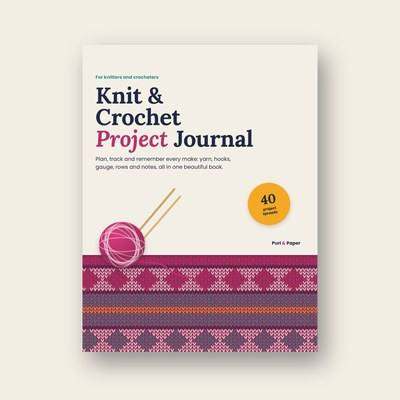
Knit and Crochet Project Journal paperback cover

Our paperback

Knit & Crochet Project Journal

Which hook was that? How many skeins did it take? 40 two-page project spreads with 100-row counters, yarn weight and hook size charts, a stash inventory, abbreviations and graph paper. 8.5 x 11 in, 110 pages.

See it on Amazon ($9.99)

This is our own book. The Amazon link is an affiliate link, so we may also earn a small commission, at no extra cost to you.

Made by us, for your next project

These tools are free. If you'd like printables or planners to go with them, our shop helps keep the site free.

See the whole shop on Etsy