Home / Junk journal supply checklist
Junk journal supply checklist
Everything you need to start a junk journal, and the 16 things you probably already have at home. Tick what you've got, pick a budget and get a short shopping list, plus a free pocket and tag template to print.
Tick what you already have. Your ticks stay on this device.
Your plan
What supplies do I need to start a junk journal?
Only five things are must-haves: paper, a cover, an adhesive, scissors and a way to bind it (thread and a needle, or a stapler for a thin booklet). Stampin' Up's list of basics is paper, a trimmer or scissors, adhesive, pens or markers, and ephemera, with stamps, ink, ribbon and embellishments as add-ons. 101 Planners groups supplies the same way: paper, ephemera, decorations, writing tools and adhesives.
What can I use for free?
- Pages: printer paper, old book and magazine pages, envelopes, wrapping paper, brown bags, maps and sheet music.
- Cover: the cover of a worn-out hardback, or a cereal box covered with paper or fabric.
- Ephemera: receipts, tickets, tags, labels, postcards, packaging, napkins and stamps from your post (101 Planners). Our 62 ephemera ideas has a list to tick off.
- Decoration: ribbon and lace from gift wrap, buttons, fabric scraps, and pressed leaves and flowers.
- Ageing: a cup of tea. Our tea staining guide shows how.
What's worth buying first?
Our picks for a small first shop: a glue stick (dries flat on thin paper), a tacky glue for lace and buttons, a roll or two of washi tape, and a big-eye needle for sewing signatures. A bone folder and an ink pad are the next most useful. 101 Planners suggests paper of about 100 gsm or more if you'll write or paint on the pages, so ink doesn't show through.
What glue is best for a junk journal?
- Glue stick: paper on paper. Thin, flat and quick.
- Tacky or liquid glue: fabric, lace, buttons and heavy card. Use a thin layer so pages don't buckle.
- Double-sided tape or a tape runner: instant and flat, good for photos and pockets.
- Glue dots: small heavy things like buttons and charms.
Our tip: put heavy pages under a book while they dry so they stay flat.
How do I bind the pages?
Fold a few sheets in half, nest them together into a "signature", poke 3 or 5 holes along the fold and sew through them into the cover. Our signature calculator works out how many sheets, where the holes go and how much thread you need. For a first try, a thin booklet stapled down the middle works too.
Free pocket and tag template
Our own design: one pocket and three tags with cut and fold lines. Print it on card, or on plain paper and tea-stain it, then tuck the tags into the pocket. For more pocket styles and a template sized to your page, see junk journal pockets.
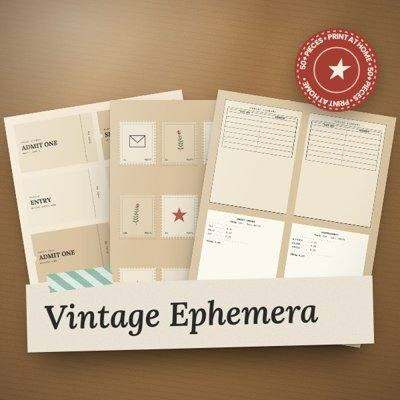
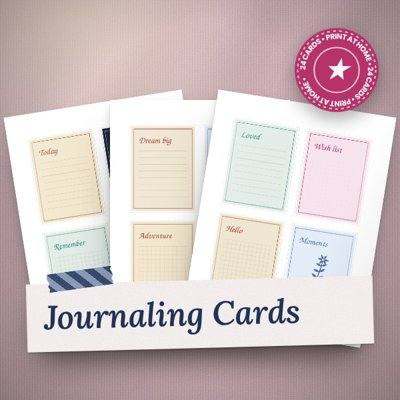
Want more free printables? Sign up below for our free sampler with journaling cards and a vintage ephemera sheet. New to all of this? Start with junk journaling for beginners, then grab an idea from the journal prompt generator.
Questions crafters ask
What supplies do I need to start a junk journal?
Paper, a cover, an adhesive such as a glue stick, scissors, and thread and a needle (or a stapler) to bind it. Ephemera like tickets and receipts, washi tape and pens are the next things to gather.
Can I make a junk journal for free?
Yes. Use printer paper, envelopes and old book pages for the pages, a cereal box or old book cover, string to sew it, and receipts, tickets and packaging as ephemera.
What is the best glue for junk journals?
A glue stick for paper on paper, tacky glue for fabric, lace and buttons, and double-sided tape or glue dots for instant, flat hold.
What paper is best for junk journal pages?
Any paper works, and mixing types is part of the look. For pages you'll write or paint on, paper of about 100 gsm or heavier stops ink showing through.
Do I need a sewing needle to make a junk journal?
A big-eye tapestry or bookbinding needle is easiest for sewing signatures. For a thin first journal you can staple the fold instead.
Where are my ticks saved?
On this device, in your browser. Nothing is uploaded. Use 'Print my list' to keep a paper copy.
Free printable sampler
Journaling cards, a vintage ephemera sheet and a planner page from our shop, free to print. Plus new freebies and pattern ideas now and then.
Free. No spam, unsubscribe in one click. See our privacy policy.